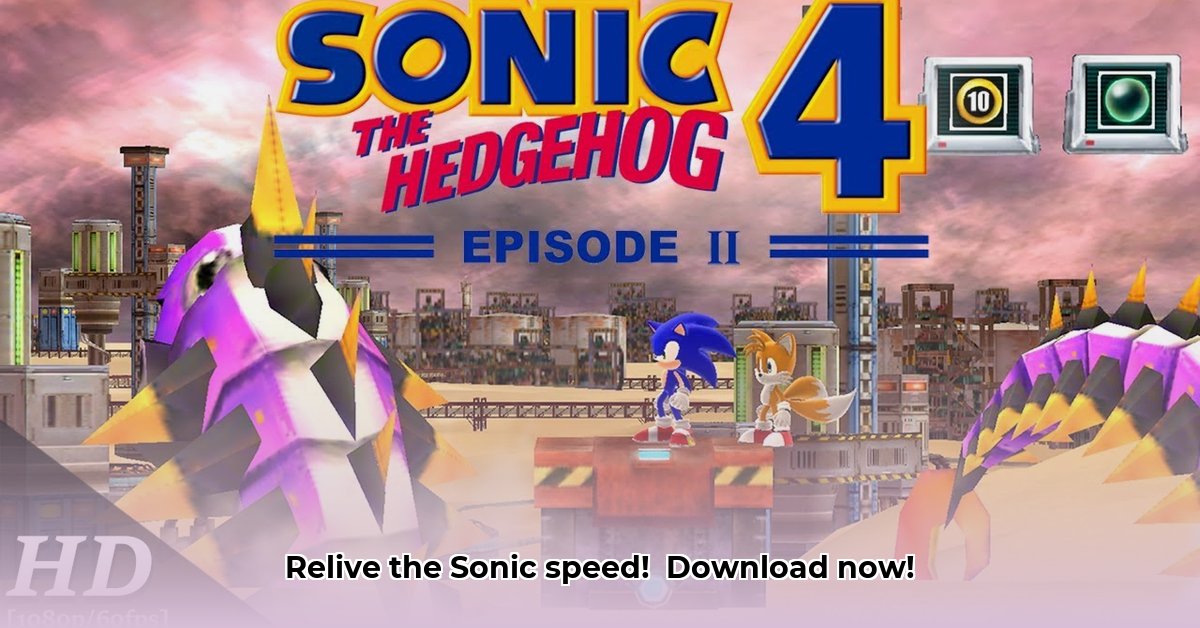
Remember the anticipation surrounding Sonic the Hedgehog 4: Episode I's 2010 release? A return to 2D Sonic, bridging classic gameplay with modern hardware. This review revisits that experience, examining its gameplay, visuals, and lasting impact on the Sonic franchise – and how to improve the often-criticized PC controls. Let's dive into this nostalgic trip down memory lane.
Gameplay: Speed and Frustration
Sonic 4: Episode I aimed to recapture the exhilarating speed of classic Sonic games, incorporating the iconic Spin Dash and introducing the Homing Attack. While the Spin Dash felt largely faithful, the Homing Attack proved divisive. Its convenience sometimes overshadowed the precise platforming that defined the originals, leading to debate amongst players. Was it a helpful tool or a crutch that undermined the game's challenge? The answer, as we'll see, varies depending on individual playstyles and preferences. Control schemes further complicated the situation. The mobile version's touchscreen controls proved either snappy and intuitive or frustratingly imprecise, highly dependent on device and player preferences. The PC version's keyboard/controller support offered more traditional control, but still lacked the fluidity many expected. This highlights a surprising challenge: Even a seemingly simple mechanic like control can dramatically alter a player’s experience.
Level Design: Nostalgia Meets Frustration
The level design presented a compelling mix: moments of pure Sonic bliss, cleverly modernized takes on classic zones like Green Hill Zone, contrasting strongly with sections that felt clunky, poorly paced, and overly punishing. Did it capture the classic Sonic feel? Sometimes, yes, it delivered moments of pure exhilaration; other times, it fell flat. This inconsistency created a significant hurdle for the game, leaving players with a highly varied experience. A critical question arises: How could a game so reminiscent of the classics also include frustrating, less-than-inspired levels?
Visuals and Audio: A Familiar Tune, Slightly Off-Key
Visually, the game attempted a balance between classic charm and modern capabilities. While the sprites were crisp, some felt they lacked the personality of their pixelated predecessors. The music, however, largely succeeded, providing echoes of classic Sonic tunes, triggering waves of nostalgia for many players. However, even here, opinions differed; some felt the soundtrack, while enjoyable, didn't quite match the quality of previous games’ soundtracks. How was a game, attempting to evoke the strongest associations with legacy Sonic games, able to miss such a significant mark in its visual and audio design?
Reception and Legacy: A Divided Community
Critical reception was, predictably, mixed. PC and mobile players voiced distinct complaints and praises. The game's legacy remains debated: a nostalgic curiosity? A missed opportunity? Its position within the broader Sonic franchise is still up for discussion. It’s a testament to both its charm and its shortcomings.
Platform Comparison: PC vs. Mobile
The PC and mobile versions offered distinct experiences:
| Feature | PC | Mobile |
|---|---|---|
| Controls | Keyboard/Controller; more precise, but potentially less intuitive. | Touchscreen/Accelerometer; less precise, but potentially faster paced. |
| Graphics | Higher resolution, crisper visuals | Lower resolution, potentially smoother frame rates depending on device. |
| Performance | Generally more consistent | Varied performance based on device specs. |
| Overall Experience | More traditional feel, often a more challenging experience. | Streamlined controls; potentially a quicker, more accessible feel, but possibly less nuanced gameplay. |
This dual release strategy, while ambitious, may have diluted the impact, preventing either version from achieving universal appeal.
How to Improve Sonic 4 Episode I Controls on PC
The PC port’s Java dependency is a significant factor in its often-criticized control issues. Many players report difficulties configuring controllers and experience clunky, unresponsive controls. Workarounds exist, most notably the Sonic 4 Rewritten Launcher, a community-created tool offering improved control options and stability. Alternatively, running the game's configuration tool as administrator might provide necessary permissions for improved compatibility, although this raises minor security concerns. The impact of the Java dependency raises an important question: Could different technical choices have significantly improved the PC port's reception?
Conclusion: A Nostalgic Rollercoaster Ride
Sonic the Hedgehog 4: Episode I aimed for a successful return to 2D Sonic. It delivered moments of classic Sonic magic, sparking nostalgia, but it also stumbled, with frustrating levels and divisive gameplay choices significantly impacting the overall experience. Ultimately, whether it's a success or a failure depends on individual experiences and perspectives. This game serves as a reminder that even iconic franchises face hurdles when revisiting their past. What resonated strongly with one player might have completely disappointed another, showcasing the game's strengths and shortcomings. It's a game that evokes strong emotions, a nostalgic rollercoaster ride filled with highs and significant lows.
PCGamingWiki
⭐⭐⭐⭐☆ (4.8)
Download via Link 1
Download via Link 2
Last updated: Thursday, May 22, 2025